
Short answer: Installed cost varies with the bathroom and the model, so we give each home its own free written quote. The plumbing permit usually comes from your village or town building department, not the county, and some villages license plumbers themselves.
- Most Long Island houses have a 60-inch tub alcove, which suits standard walk-in tubs.
- Split-levels and high ranches put the bathroom up a half flight: measure that stair.
- Check the basement water heater: a smaller tank may not fill a walk-in tub with hot water.
- Veterans may qualify for VA HISA funds; older homeowners can ask about RESTORE and EISEP.
Which walk-in tub fits a Long Island house?
Long Island's postwar housing is kinder to walk-in tubs than most city apartments. A Cape Cod, a ranch or a split-level usually has a single full bath with a 60-inch alcove tub, and that alcove is exactly what most walk-in tubs are built to drop into. The questions that decide the model are the person's body and the bathroom's details, not the house style.
| House style | Where the full bath usually is | What to check before ordering |
|---|---|---|
| Cape Cod | Main floor, sometimes a second bath upstairs under the roof slope | Sloped ceilings over an upstairs tub; which bath the bather will actually use |
| Ranch | Main floor, off the hall | Hall width and bathroom door; easiest delivery on the island |
| Split-level | Up a short half flight | Stair turn and handrail for the delivery and for daily use |
| High ranch (raised ranch) | Upstairs, a full flight from the entry | Delivery up the main stair; whether a ground-level bath is a better long-term spot |
| Colonial and newer builds | Second floor, plus a primary bath | Larger alcoves may fit a wide or two-seat tub |
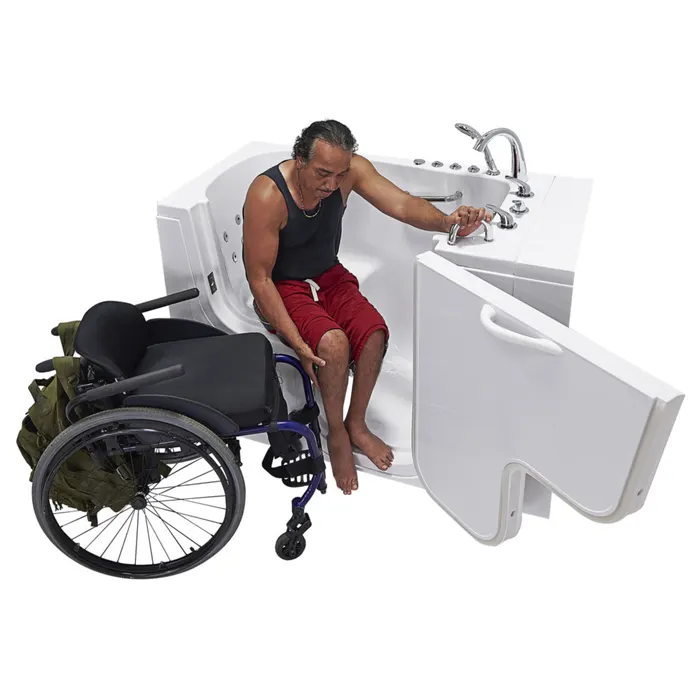
If the person bathing uses a wheelchair or can only transfer from a seat, a transfer-style tub with an outward-swinging door and a seat at chair height is usually easier than a standard walk-in door. Aging Safely Baths compares those models on its wheelchair transfer bathtub page.
Do you need a permit for a walk-in tub on Long Island?
Usually yes, and it comes from the municipality closest to you. In Nassau and Suffolk, permits run through the incorporated village if you live in one, and through the town if you do not. The rules vary more than people expect. The Village of New Hyde Park, for example, accepts plumbing permit applications only from a plumber holding a license issued by the village, lists bathtubs on its fixture fee schedule, and requires a rough inspection and a final inspection with 24 hours' notice. A neighboring village may do it differently.
Two practical takeaways. First, ask whether the installer's plumber is licensed where you live, not just somewhere on Long Island. Second, build the inspection into the schedule: a one-day install can still mean the final sign-off happens a few days later.
Want a written price for your bathroom?
Call, or send a few photos of the tub, the doorway and the water heater. You get an itemized quote with no high-pressure sales visit.
What does a walk-in tub cost on Long Island?
The same as anywhere else we install. Installed pricing depends on the bathroom and the model, so call for a free written quote. Every quote is itemized and in writing.
On Long Island, the water heater is the line item most likely to surprise you. A walk-in tub holds more water than a standard tub, and an older basement tank may run out before the tub is full and hot. Options include a larger tank, a tankless heater or an inline heater on the tub. The full sizing math is on the water heater sizing guide for walk-in tubs. Jetted and heated tubs also need a dedicated electrical circuit, which is often run from a basement panel.
Is there help paying for a walk-in tub on Long Island?
Sometimes, for part of it, and the rules matter. None of these programs promise a walk-in tub, so treat this as a list of calls to make, not money in hand. Our New York walk-in tub funding guide compares the caps and income limits side by side.
| Program | Who it serves | What it may pay for | How to apply |
|---|---|---|---|
| VA HISA | Veterans with a medical need for the change | Up to $6,800 lifetime for service-connected conditions, $2,000 otherwise; not spa or jet features | Through your VA health care team |
| RESTORE (NYS Homes and Community Renewal) | Homeowners 60+ with income up to 100% of area median | Emergency repairs and code problems that threaten health or safety; project cap raised to $20,000 in 2022 | Through a local nonprofit or municipal program administrator, not HCR directly |
| Access to Home and Access to Home for Heroes | People with disabilities; veterans with disabilities | Accessibility modifications | Through local program administrators funded by HCR |
| EISEP | Adults 60+ who need help with daily activities and are not eligible for the same services through Medicaid | Case management, in-home help, and ancillary services such as home repairs and assistive devices | Your county Office for the Aging or NY Connects, 1-800-342-9871 |
| Medicare | Medicare beneficiaries | Original Medicare generally does not pay for walk-in tubs; some Medicare Advantage plans have bathroom safety benefits | Call your plan |
The IRS medical expense rules can also help some families. Publication 502 lets you count the part of a medically necessary home improvement that does not raise your home's value, and only medical costs above 7.5% of adjusted gross income are deductible. Ask your tax preparer before you count on it.
Want a written price for your bathroom?
Call, or send a few photos of the tub, the doorway and the water heater. You get an itemized quote with no high-pressure sales visit.
Where on Long Island do you install?
Everywhere from the Queens line to Montauk, including Hempstead, Oyster Bay and North Hempstead in Nassau, and Babylon, Huntington, Islip, Smithtown, Brookhaven, Riverhead, Southold, Southampton, East Hampton and Shelter Island in Suffolk. Factory-certified installers cover the whole island, and the site visit happens before install day wherever you live. If you would rather use your own Long Island plumber, Aging Safely Baths also ships supply-only tubs with full spec sheets.
Walk-in tub or walk-in shower for a Long Island bathroom?
It comes down to how the person bathes today and how that may change. A walk-in tub suits someone who can sit and stand with a grab bar and wants a warm soak, especially through a long, damp island winter. A low-threshold or roll-in shower suits someone who uses a walker, a wheelchair or a shower chair, or who does not want to wait seated while the tub drains. Both fit the same alcove, and both can be installed in a day.
Frequently asked questions
How much does a walk-in tub cost on Long Island?
Pricing is quoted for your bathroom and model after a short conversation, at no cost. A water heater upgrade or a new electrical circuit for a jetted tub are the most common extra lines on Long Island quotes.
Who issues the permit for a walk-in tub in Nassau or Suffolk?
Usually your incorporated village, or your town if you do not live in a village. Rules vary: some villages, such as New Hyde Park, accept plumbing applications only from plumbers licensed by the village and require rough and final inspections.
Is there an in-home consultation on Long Island?
Yes, after you choose. You get an itemized price by phone or from photos first, with no high-pressure sales visit. Once you pick a tub and place a deposit, a factory-certified tech does a full site visit to measure, photograph and answer questions before install day.
Can RESTORE pay for a walk-in tub?
Rarely on its own. RESTORE serves homeowners 60 and older with income up to area median and pays for emergency repairs and code problems that threaten health or safety. Ask the local program administrator whether your situation fits before planning around it.
How long does a Long Island install take?
One day in most homes, once the site visit and permit are done. The village or town final inspection may happen a few days later, and you can usually bathe the same day or the next day.
Related New York guides
Sources
- NYS Homes and Community Renewal, RESTORE program
- Governor of New York, $62 million for Access to Home, RESTORE and related programs (August 10, 2026)
- NYS Office for the Aging, Expanded In-home Services for the Elderly (EISEP)
- Village of New Hyde Park, plumbing permit application (2025)
- VA Prosthetic and Sensory Aids Service, HISA
- IRS Publication 502, Medical and Dental Expenses
- Medicare.gov, durable medical equipment coverage
No bathing product eliminates the risk of falls; products are designed to reduce risk when installed and used properly. Program rules change: confirm with the agency before you apply. Not medical, legal or tax advice.